
Why choose LVT?
- Realistic wood and stone designs, including herringbone and chevron layouts
- Water-resistant – ideal for kitchens, bathrooms and utility rooms
- Hard-wearing and easy to clean, so a good choice for families, pets and lets
- Warmer and quieter underfoot than tiles
- Suitable for use with most underfloor heating
Recent LVT projects
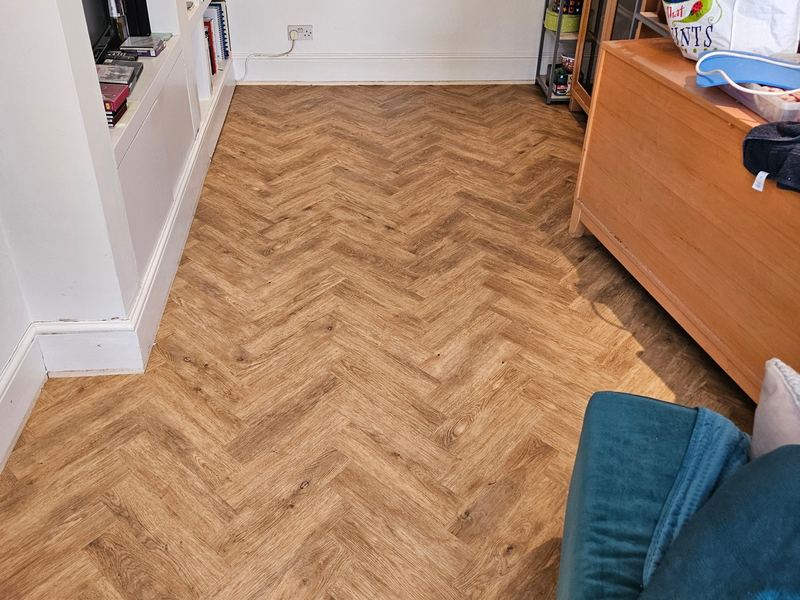
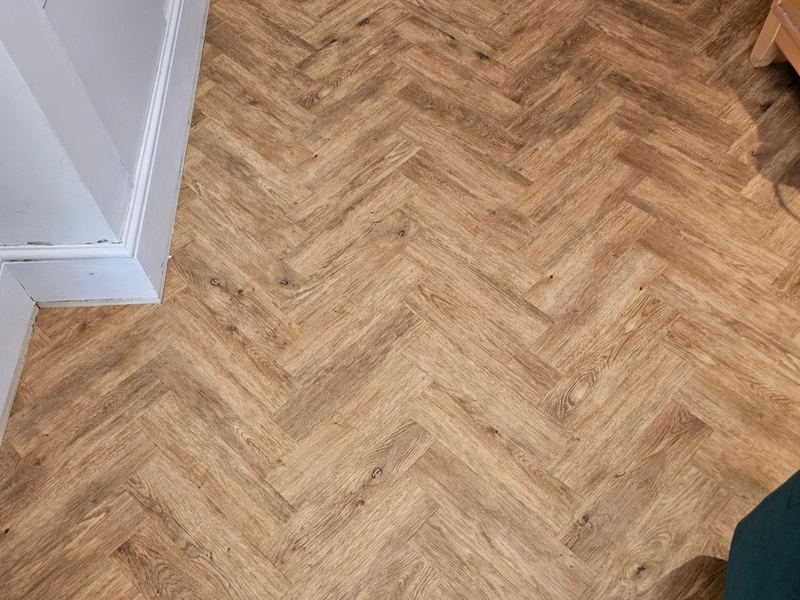
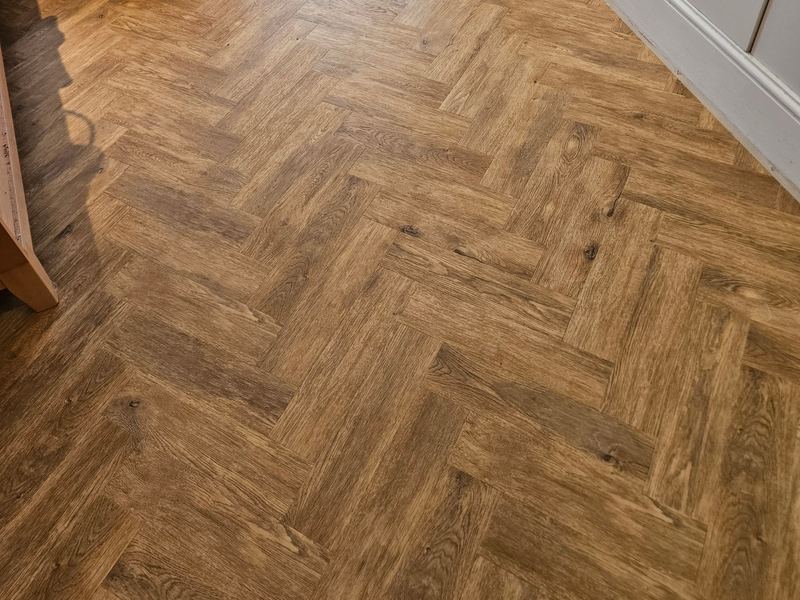
Herringbone living room and hall. Oak-effect herringbone LVT, glued down and set out from the centre of the room so the pattern runs straight through into the hallway and finishes evenly at every wall.
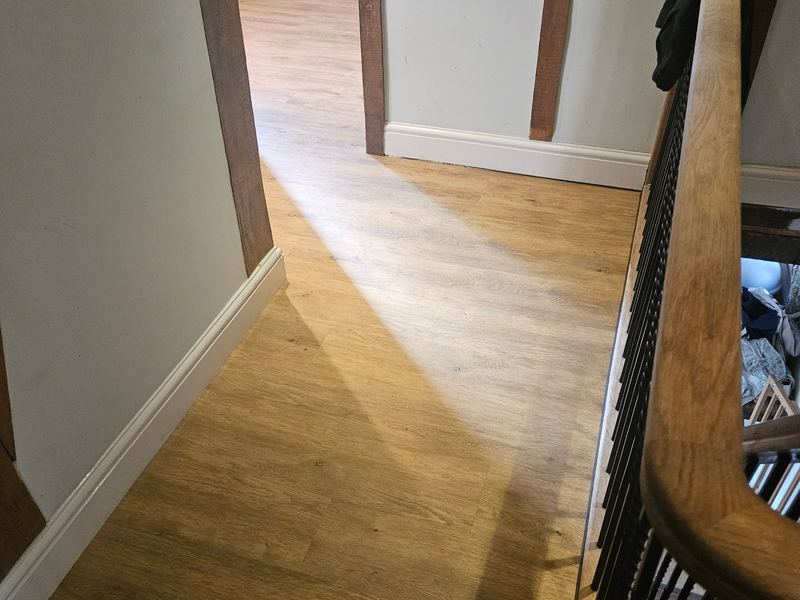
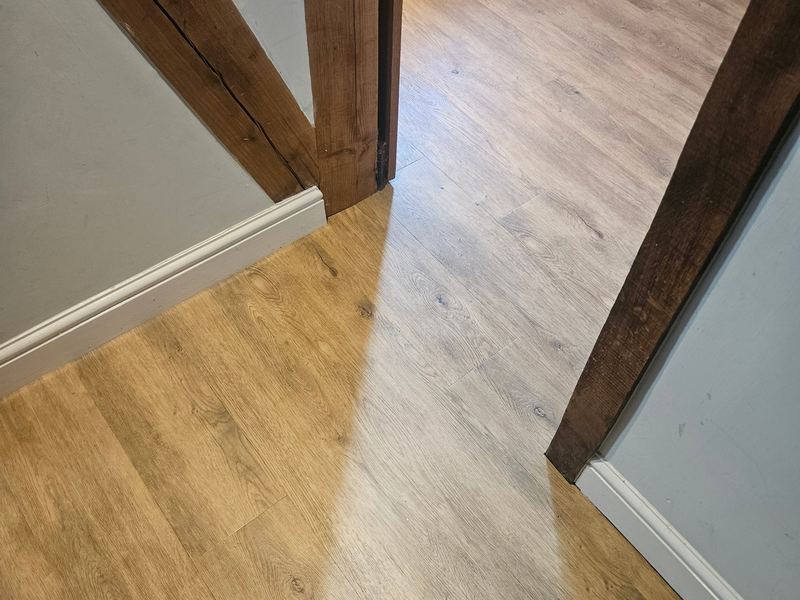
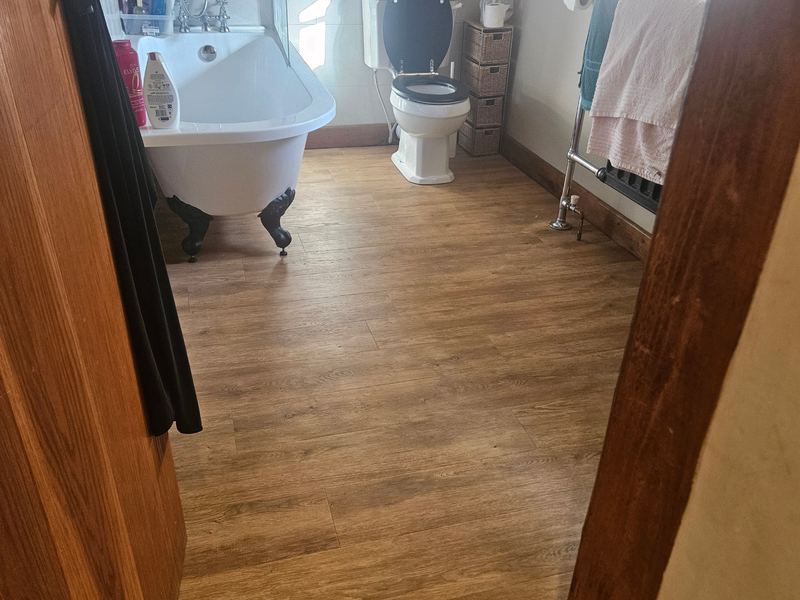
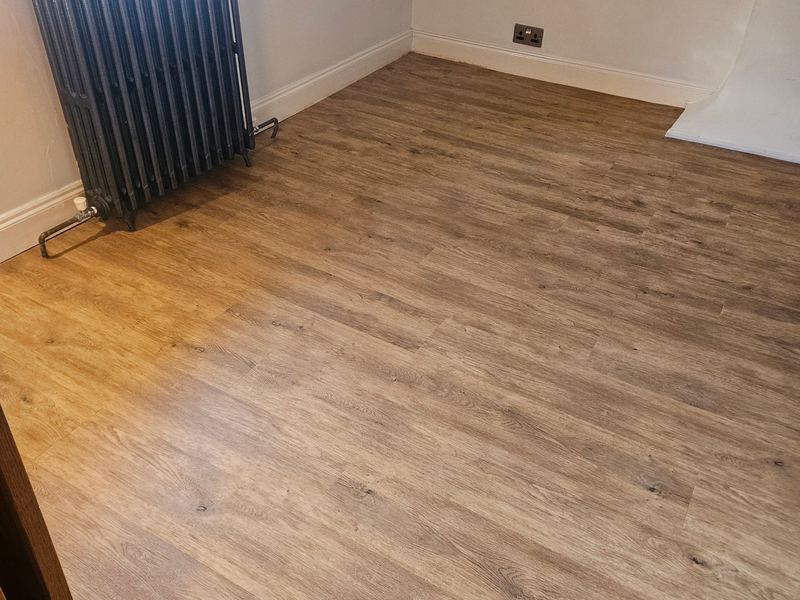
Farmhouse, straight lay throughout. Wood-effect LVT across the landing, bedrooms and bathroom of a characterful farmhouse – scribed neatly around oak beams, door posts and a roll-top bath, giving a warm, waterproof floor that suits the old building.
The secret is the subfloor
LVT is thin, so any bump or dip underneath will eventually show through. That's why preparation is most of the job. On timber floors we overboard with plywood; on concrete we apply a smoothing compound. The result is a flat, solid base that keeps your floor looking right for years.
Glue-down or click?
Glue-down LVT is bonded to a smooth subfloor and is the most durable option, especially for kitchens, commercial spaces and pattern layouts. Click LVT floats over an underlay and is quicker to install in the right rooms. We'll recommend the best option for your space and budget.
Recent LVT jobs
Questions we're often asked
How much does LVT cost to fit?
It depends on the product you choose, the size of the room and how much preparation the subfloor needs. We give a fixed written price after a free survey, so you know exactly what you'll pay.
Can LVT go in a bathroom?
Yes – LVT is a popular bathroom choice because it's water-resistant and warmer than tiles. We seal around baths, showers and toilets for a neat finish.
Do I need to remove my old floor?
Usually, yes. Old flooring and adhesive need to come up so we can prepare a flat base. We can include removal and disposal in your quote.